


When it comes to having it replaced, parquet flooring has a way of making people hesitate. On one hand, it can look tired, scratched, loose, dull or stained. On the other, it often has a character that modern flooring struggles to emulate.
One question we hear a lot at Lumberjack Wood Flooring is simple: can my old parquet floor be saved, or does it need replacing?
The good news: in many cases, the answer is yes, it can be saved. Parquet is usually more resilient than it looks, especially when it has been properly installed and the wood still has enough depth to work with.
Whether it has a worn finish, small gaps or scratches, that doesn’t necessarily mean the floor has reached the end of its life. With the right repairs, sanding and finishing, an old parquet floor, even those from the 1940s and 1950s, can often be brought back to a beautiful, practical condition.
Why Older Parquet Is Often Worth Restoring
Parquet flooring was built to last. Many older properties still have original herringbone or basketweave parquet hidden under carpets, rugs or layers of old polish. Even when it looks flat and lifeless, the wood underneath may still be sound.
We always encourage you to look beyond the surface. A floor that appears beyond repair may simply have years of dirt, old varnish, wax, scratches or discolouration sitting on top. Once that damaged surface is carefully sanded away, the natural pattern and tone of the wood can return.
Restoring parquet also helps preserve the character of the property. Original parquet blocks, especially in period or mid-century homes, are part of the building’s history. Replacing them with something new can sometimes remove that charm.
When we restore a floor, our aim is to keep as much of the original material as possible while making it suitable for modern life.
When Parquet Can Usually Be Restored
A parquet floor is often a good candidate for restoration if the blocks are mostly intact, the floor feels stable underfoot and the damage is mainly cosmetic. Scratches, dull patches, light staining and worn lacquer are common problems we regularly deal with.
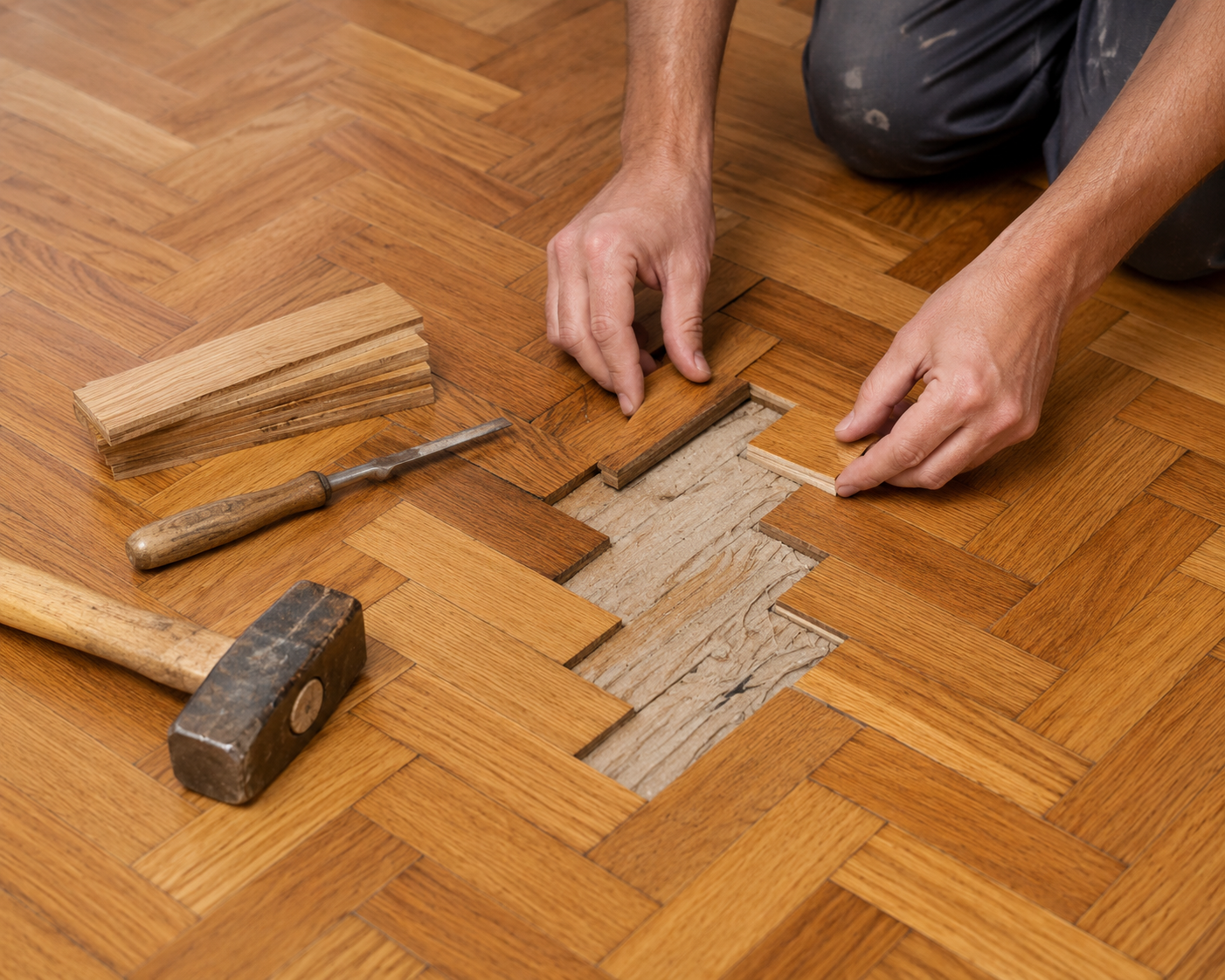
Loose blocks can often be lifted, cleaned and refitted. Small gaps can usually be filled with a suitable resin and wood dust mix, helping the floor look neater and more complete. If a few blocks are missing or badly damaged, we can often source or reuse reclaimed parquet blocks to make the repair blend in as naturally as possible.
We have restored plenty of old parquet floors that customers thought were too far gone. Sometimes the most dramatic results come from floors that have been covered for years or patched after building work, radiator changes or fireplace alterations.
Once the blocks are repaired, sanded and sealed, your floor can look completely transformed. You might feel astonished by the results.
When Replacing It Might Be the Better Option
Not every parquet floor can be fully saved. If the blocks are very thin, badly rotten, heavily water damaged or lifting across large areas, restoration may not be the most sensible route. The same applies if the subfloor underneath has failed, or there is ongoing damp that has not been fixed.
In these cases, sanding and sealing the floor would only hide the problem for a short time. We would rather be honest from the start than carry out work that will not last.
During an inspection, we look at the condition of the blocks, the adhesive, the subfloor and the level of movement across the room. That gives us a clearer idea of whether restoration, partial repairs or replacing the floor is the right choice.
What Happens During Parquet Restoration?
Every floor is different, but the process usually starts with a proper assessment. We check for loose blocks, gaps, uneven areas, old finishes, stains and any signs of moisture or structural issues. Preparation matters because sanding over an unstable floor can create more problems.
Once repairs are complete, we sand the parquet using professional equipment designed to control dust as much as possible. Parquet needs careful sanding because the grain runs in different directions from block to block. A rushed or uneven sanding job can leave marks, dips or a poor finish, which is why experience is important.
After sanding, we discuss the finish. Some homeowners want a natural look that keeps the wood light and subtle. Others prefer a richer tone or a more modern satin finish. We work with high-quality lacquers, oils and hard wax oils, including low-VOC options, so the final result suits the home and the way the room is used.
Can the Colour Be Changed?
Yes, in many cases the colour of parquet can be adjusted during the restoration. Staining can make the floor warmer, darker or more even in tone. However, parquet is made from individual blocks, and each one may absorb the stain slightly differently. That is part of its character, but it also means testing is important.
We usually recommend looking at samples or test areas before committing to a finish. The goal is not just to make the floor look good on day one; it should also feel right with your furniture, light (natural or otherwise), décor and the way the room is used.
So, Can Your Old Parquet Floor Be Saved?
There is a good chance it can be. Even if your parquet floor looks scratched, dull, gappy or uneven, it may still have plenty of life left in it. The only real way to know is to have it inspected properly, and our team at Lumberjack Wood Flooring is here to help.
If you are unsure whether to restore or replace your parquet floor, we can visit, assess the condition and talk you through the best options. Sometimes a floor simply needs expert restoration to reveal what was there all along.
For more information on our floor restorations, simply get in touch today.